
Abundant Hydrocarbons
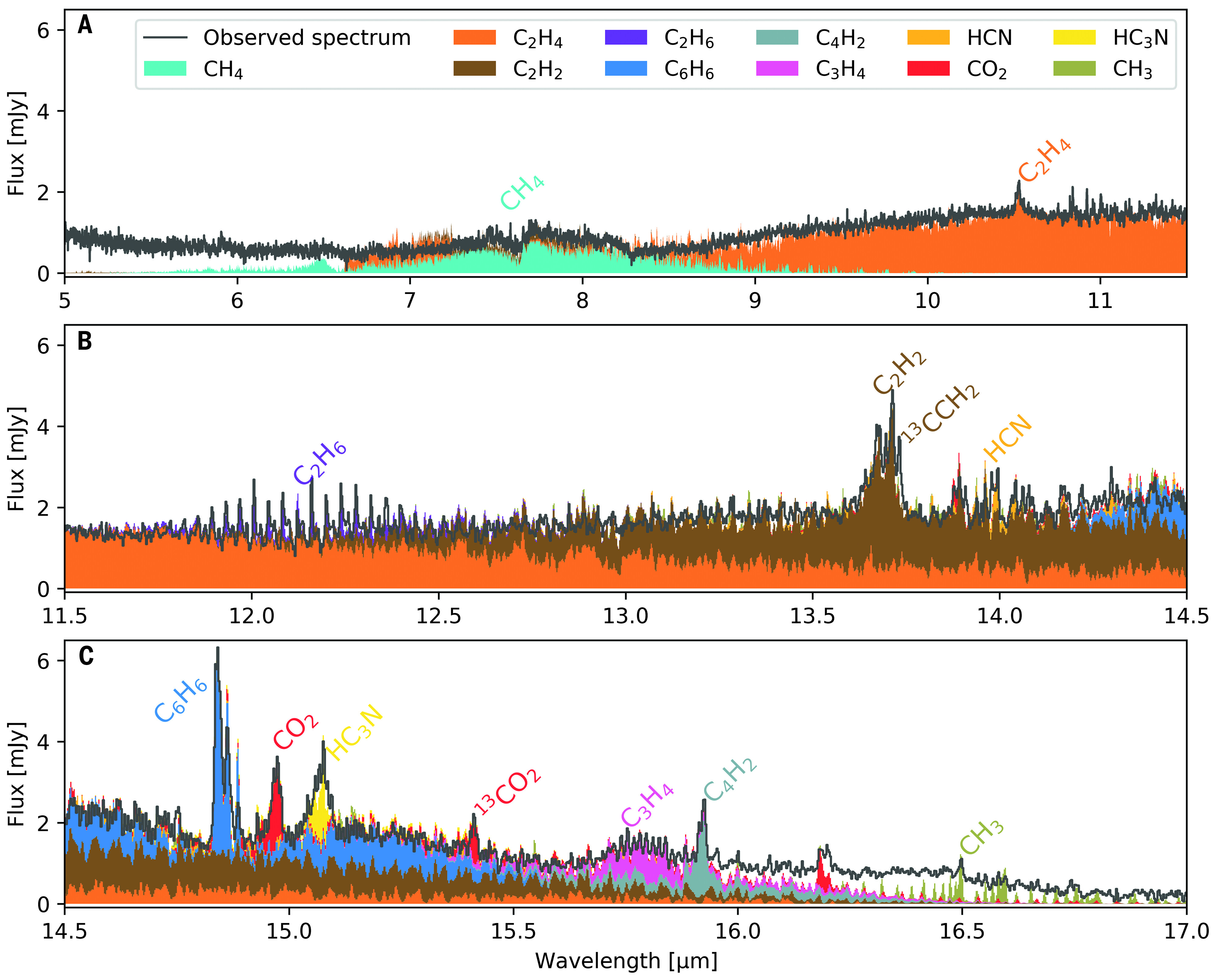
Using the zero-dimensional LTE SLAB-models that are part of ProDi...
Read more
CAI formation in the early Solar Nebula
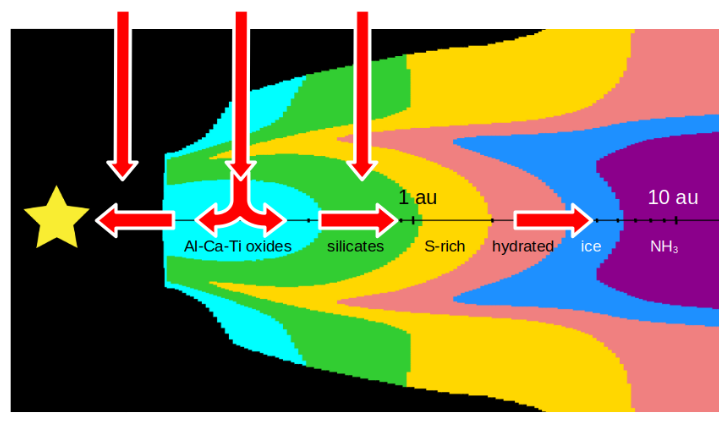
  This paper proposes a pathway to form mm-sized, pure, and...
Read more
Fitting the EX Lupi JWST line & continuum spectrum with ProDiMo
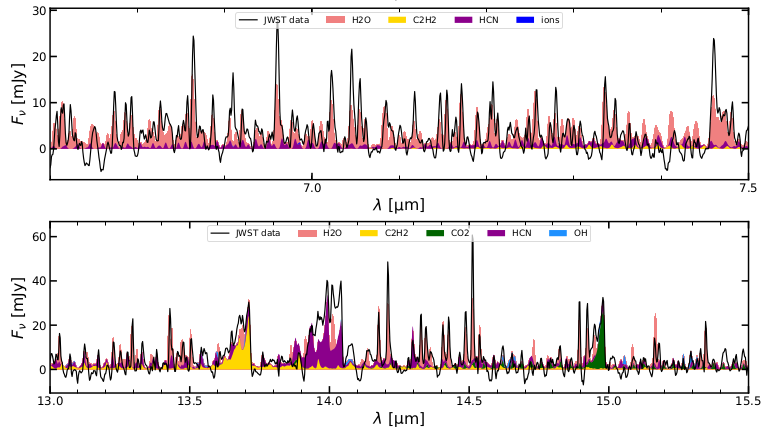
Based on an improved ProDiMo version, we developed a disc model f...
Read more
ALMA gaps
ALMA gaps
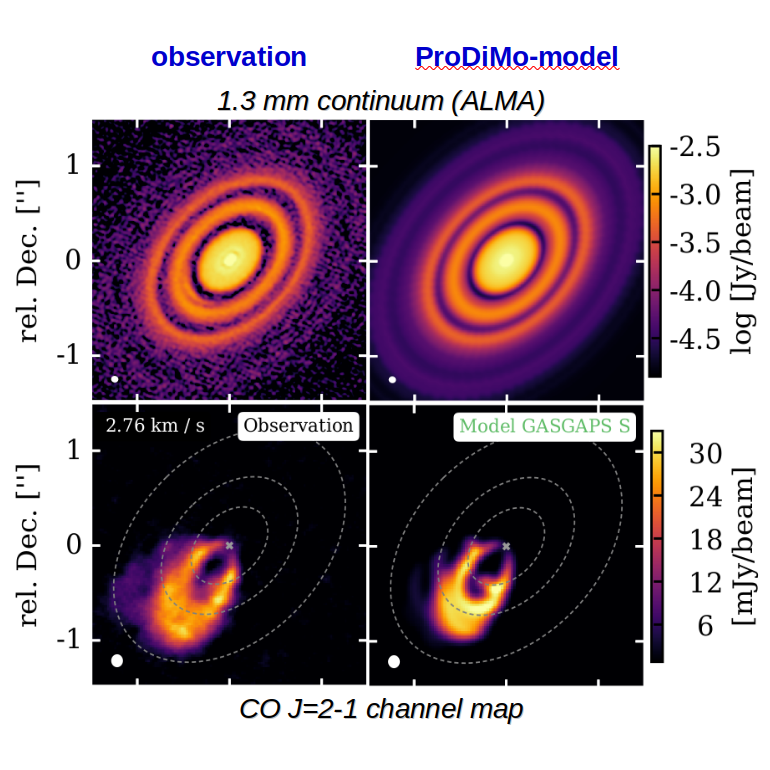
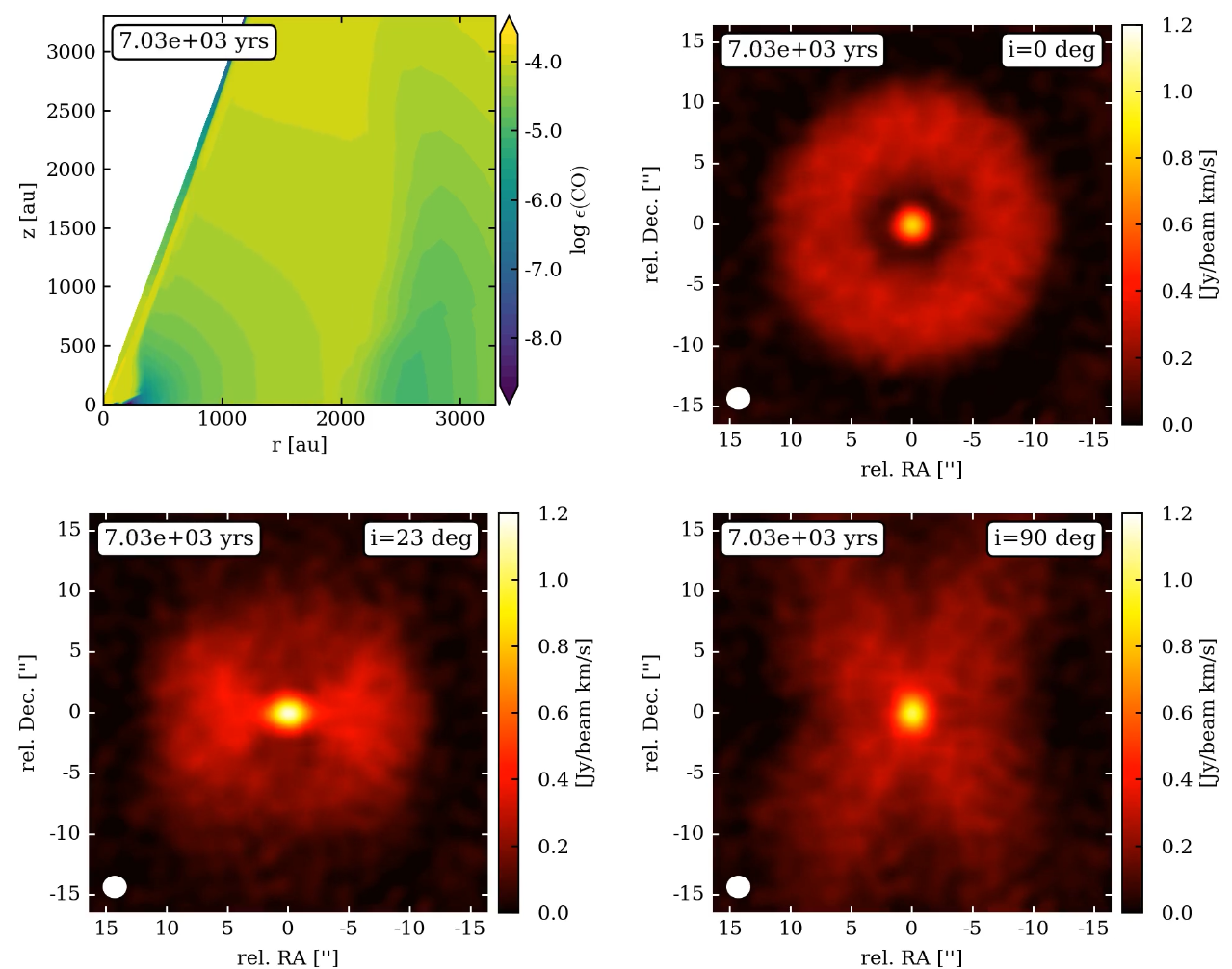
ProDiMo can predict continuum images and molecular line channel m...
Read more
ice absorption
ice absorption
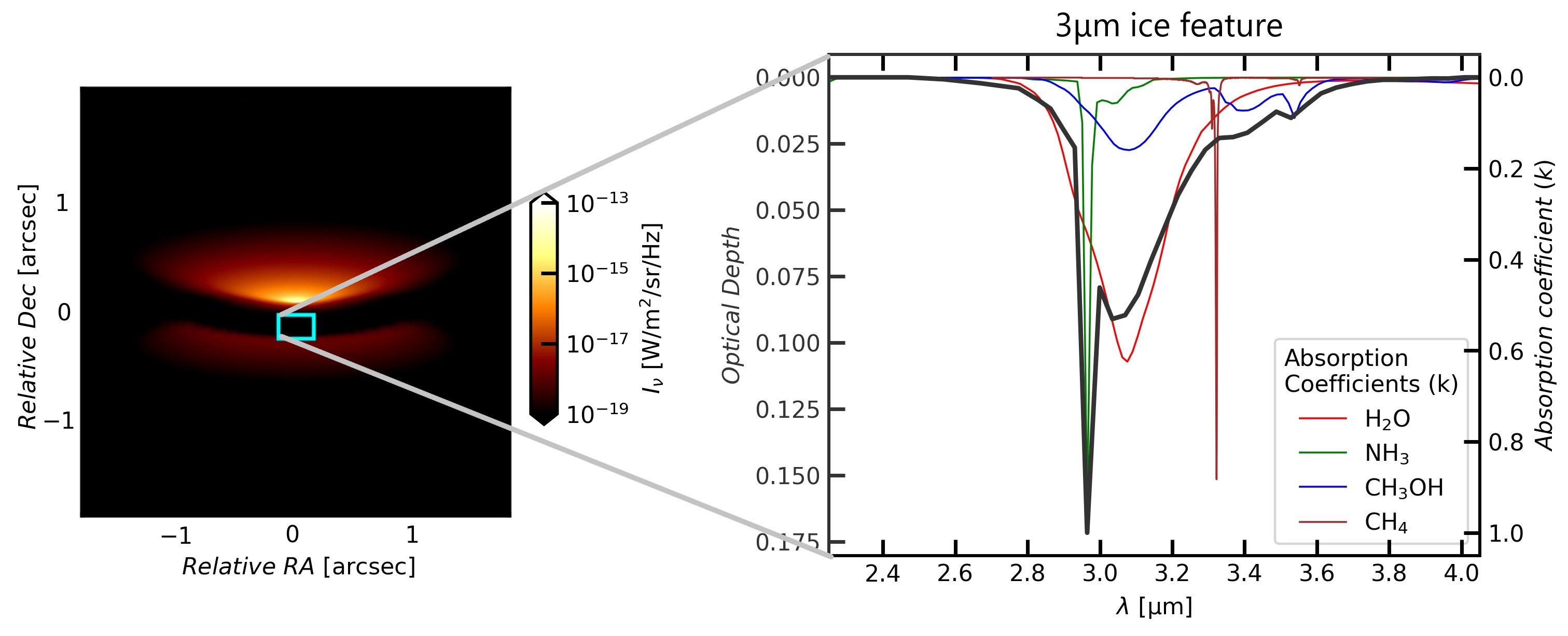
One of the latest developments of ProDiMo is to include ice opaci...
Read more
Disk winds
Disk winds
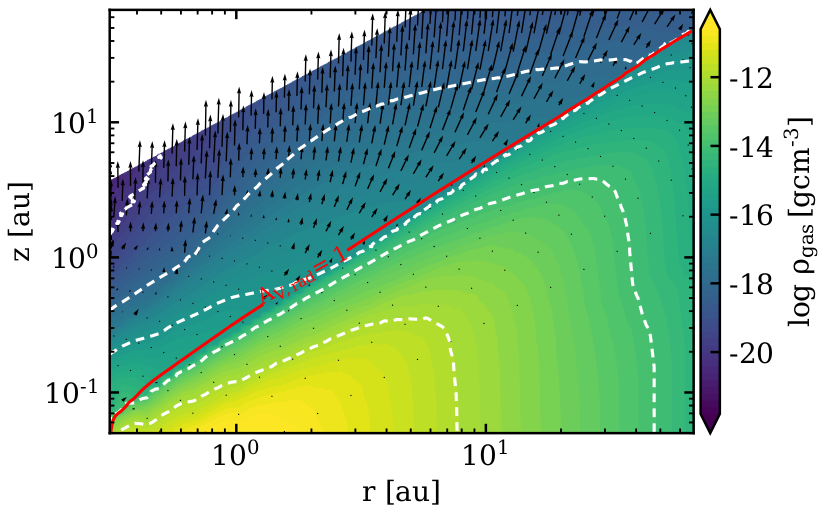
We use hydrodynamic photoevaporative disk-wind models and post-pr...
Read more
Chemical processes
Chemical processes
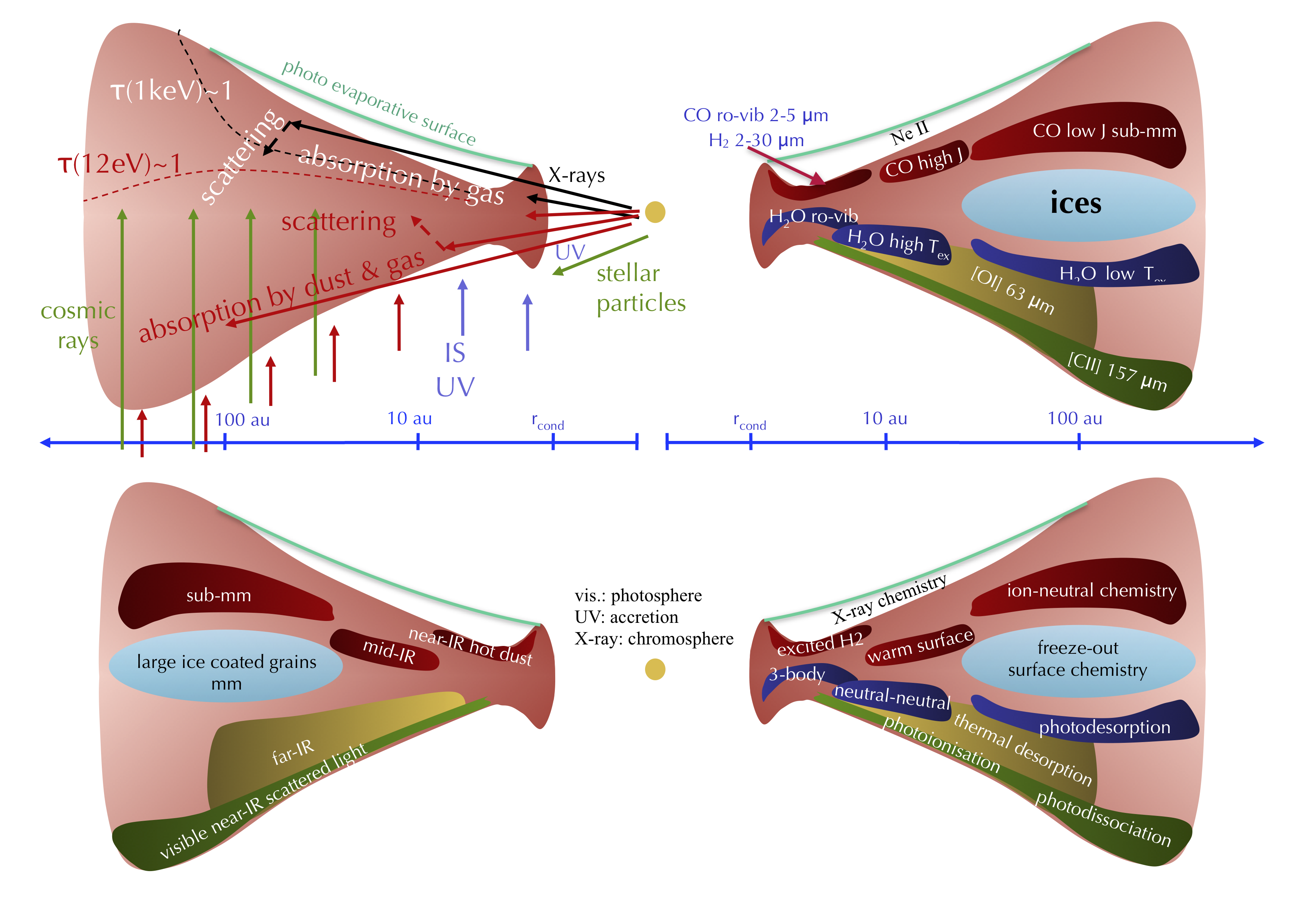
ProDiMo's goal is to model the chemistry and heating/cooling bala...
Read more
Heating and Cooling
Heating and Cooling
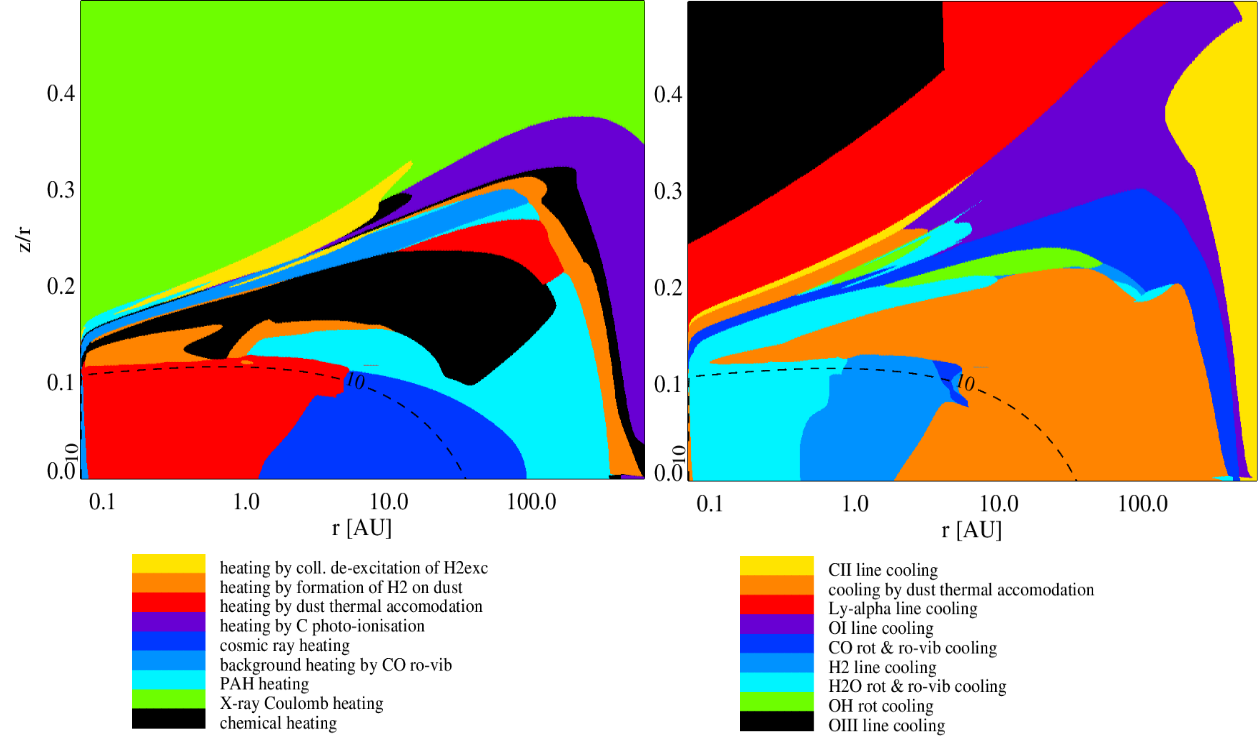
At each point in the disk, ProDiMo solves the gas heating and coo...
Read more
surface chemistry
surface chemistry
ProDiMo is now able to take into account surface chemical process...
Read more
phyllosilicates
phyllosilicates
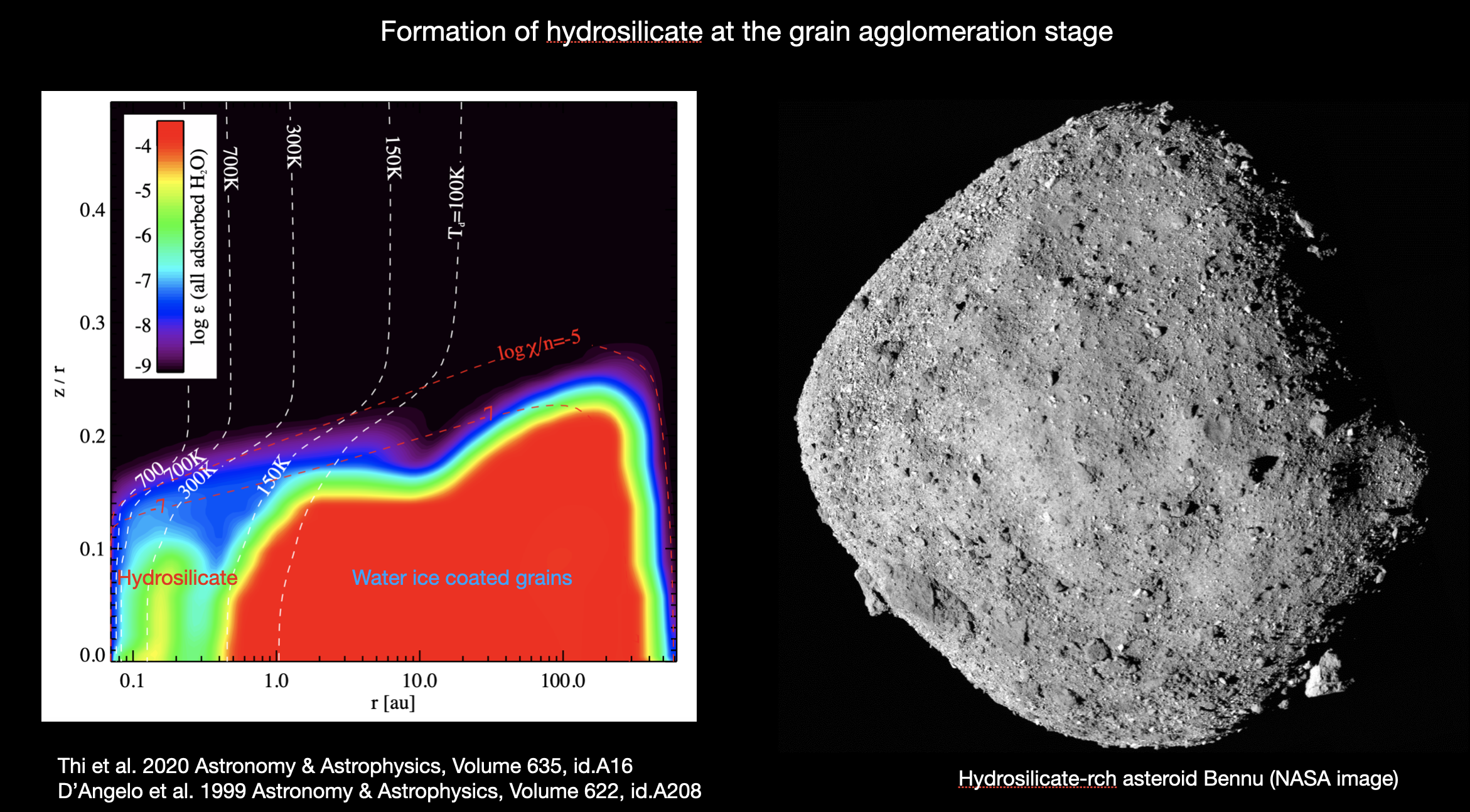
The hydration of rocks can optionally be included as a time-depen...
Read more
Chemical rate networks
With ProDiMo you can use various standard chemical rate networks ...
Read more
IR molecular line emission spectra
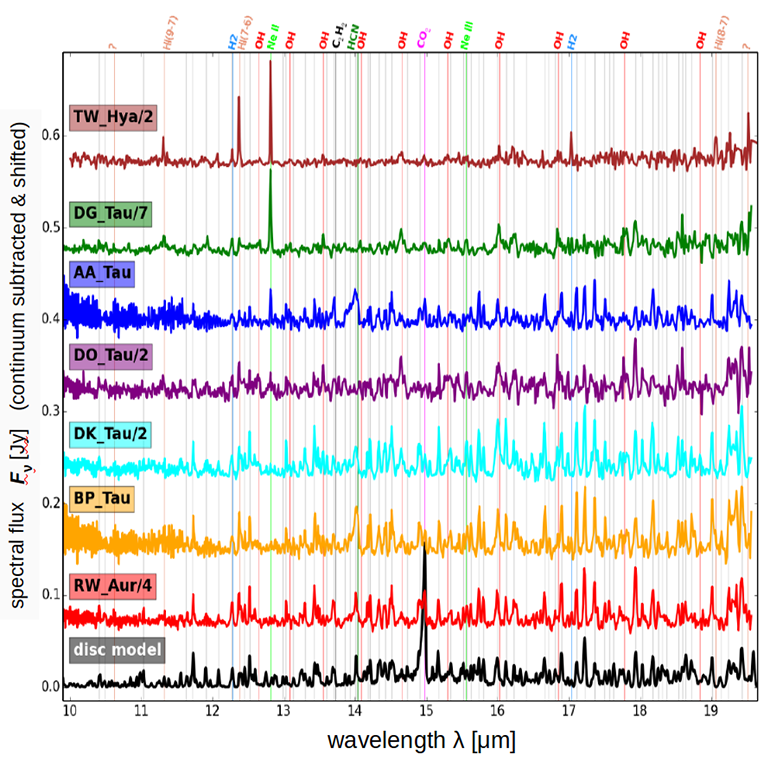
ProDiMo allows you to generate mid-IR molecular emission line spe...
Read more
CO ro-vibrational emission lines
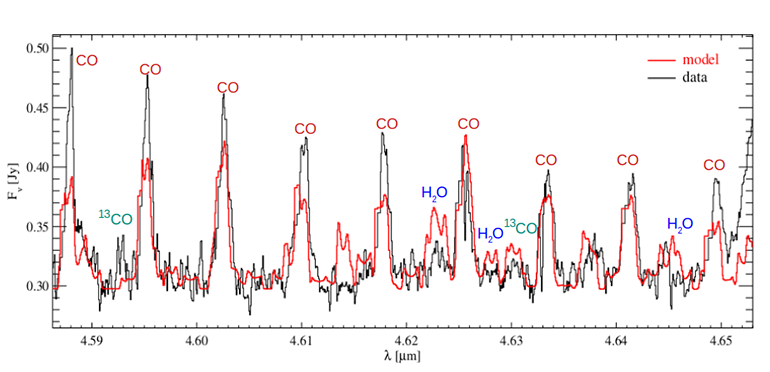
ProDiMo can predict high-resolution infrared line spectra emitted...
Read more
FU Ori outbursts
FU Ori outbursts
In FU Ori type outbursts, driven by episodic accretion, the stellar lu...
Read more

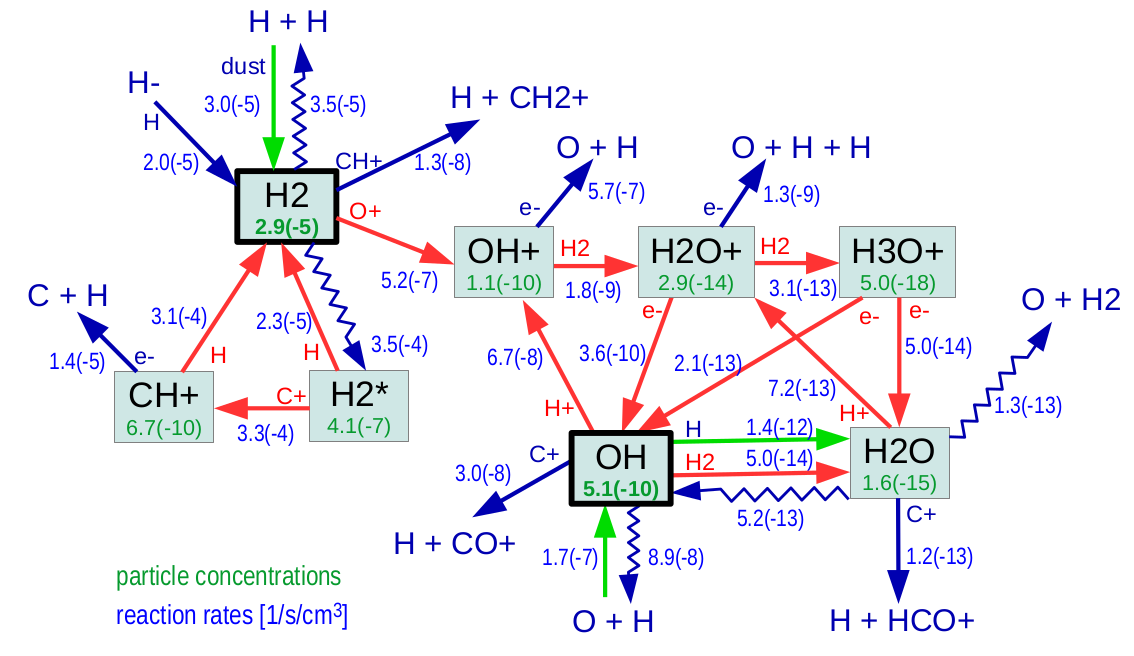
With ProDiMo you can use various standard chemical rate networks (KIDA, UMIST, OSU) in combination with your own selection of species and reaction rates. ProDiMo comes with an analysis mode where you can study how certain molecules are formed at a selected position in the disk.  The figure shows how H2, OH, and H2O are formed at r=10 au at vertical column desity NH ~ 10+20 cm-2.  Here we have a hydrogen nuclei density of n<H>=2 x 10+7cm-3. The gas and dust temperatures are 347 K and 126 K and the point is optically thin with radial and vertical visual extinctions Av_rad = 0.024 and Av_ver = 6.3 x 10⁻⁴, respectively. 

The blue numbers show the rates [cm-3s-1] and the green numbers show the concentrations ni/n<H>.  Wiggled arrows indicate photo-dissociation.  H2* means electronic excited molecular hydrogen. Light green arrows mark the H2-formation on grains and the radiative association reactions O + H -> OH + hv and  OH + H -> H2O + hv.   The reaction cycles are completed by photo-dissociation and dissociative recombination reactions, which again destroy the molecules and replenish the atoms.